Sign renewal case study — H Mart, California · 2017 → 2026
Every sign looks perfect on day one.
We build for year nine.
On installation day, a red acrylic letter face and a white acrylic face wrapped in UV-rated 3M vinyl are indistinguishable — even up close. The difference only shows up years later, in the California sun. This is what it looks like when it does.
Exhibit A — one wall, two materials
Same building. Same sun. One variable.
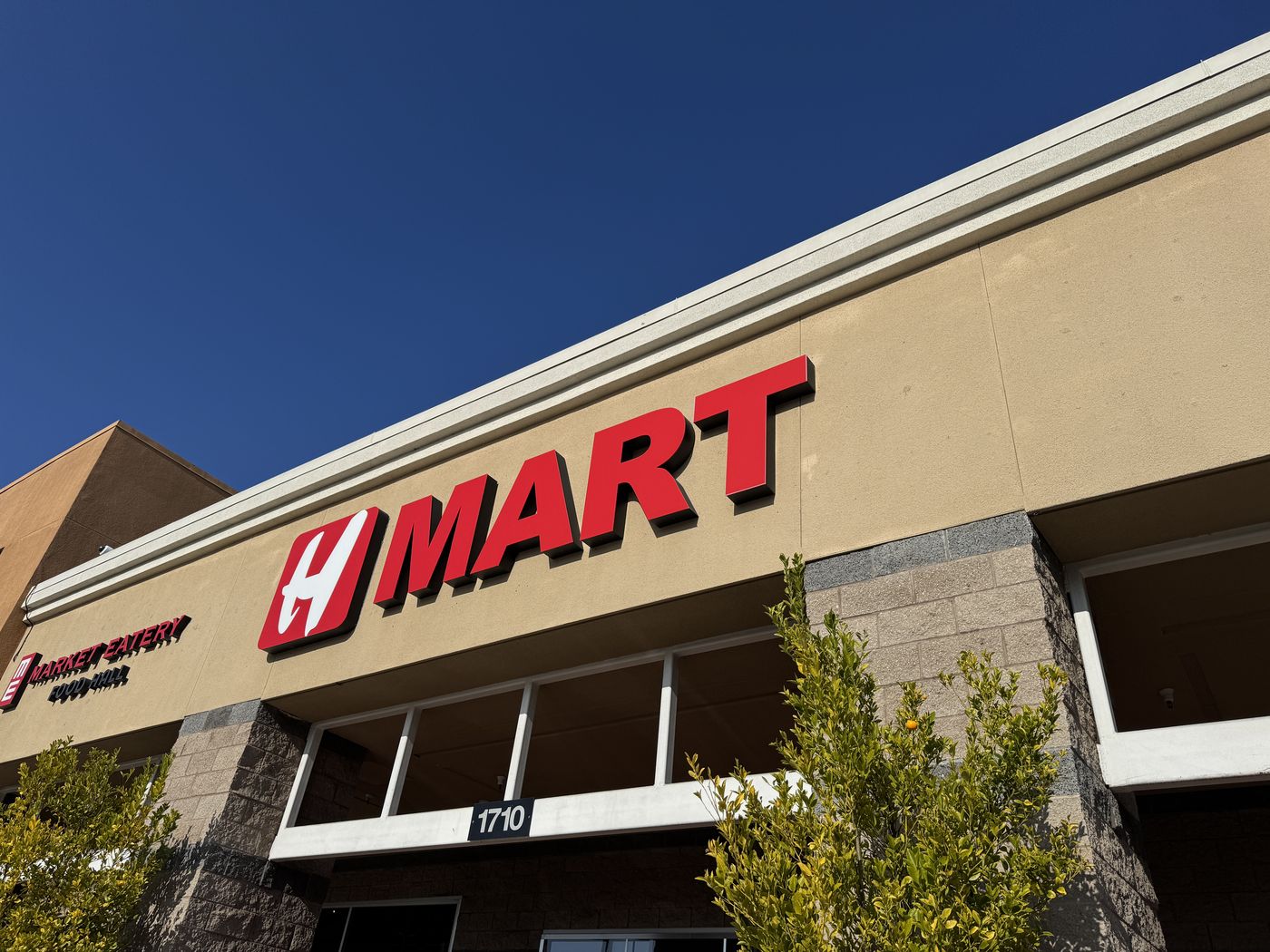
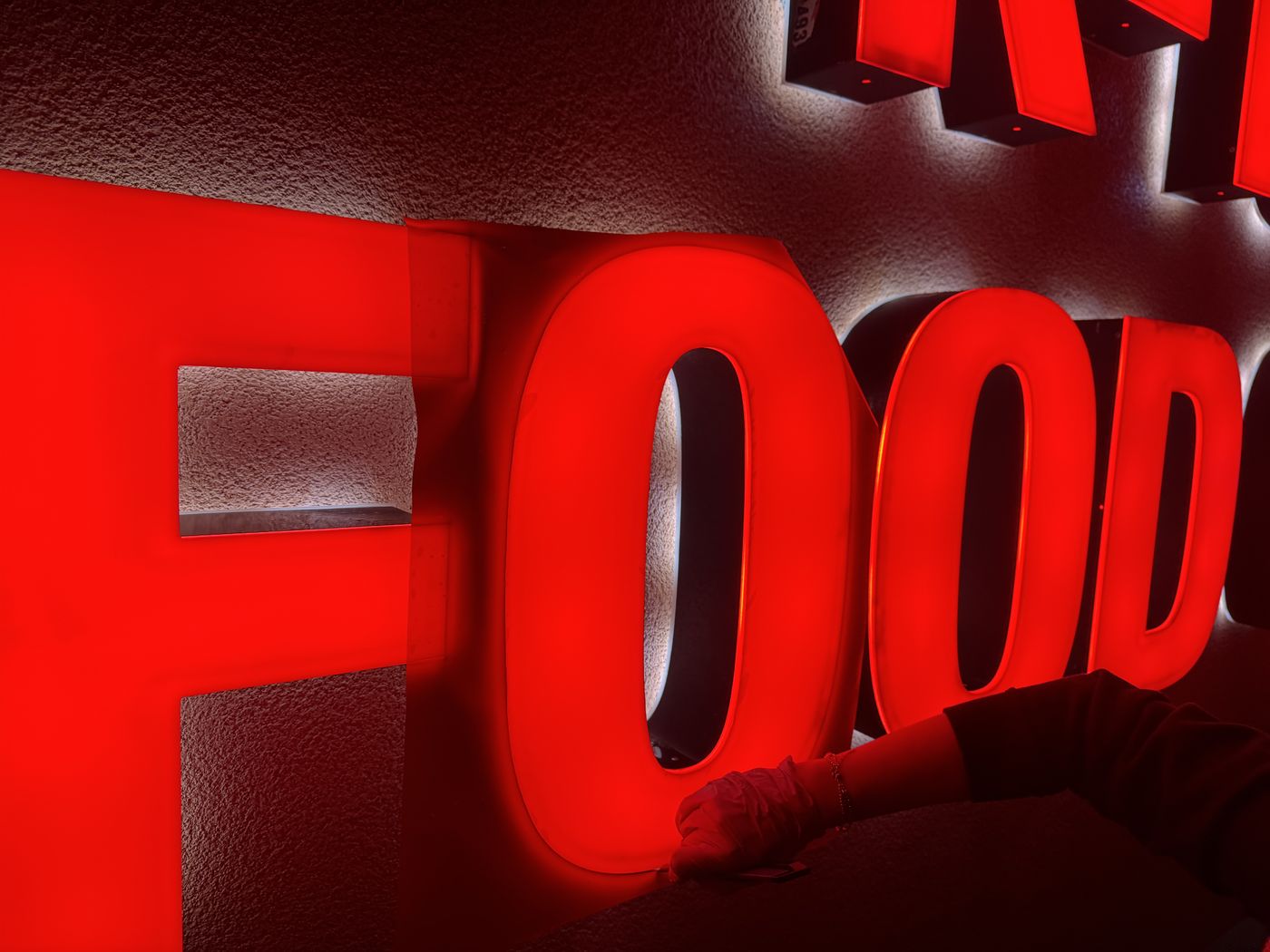
Both signs in this photo hang on the same facade, facing the same direction, under the same daily sun load. The letters on the left are red acrylic after years of California sun — the red has drifted toward pink. The sign on the right has just been renewed by our crew: the face re-skinned in UV-rated 3M vinyl, matched to the brand's specified color.
There is no better controlled experiment. Everything is identical except the material.
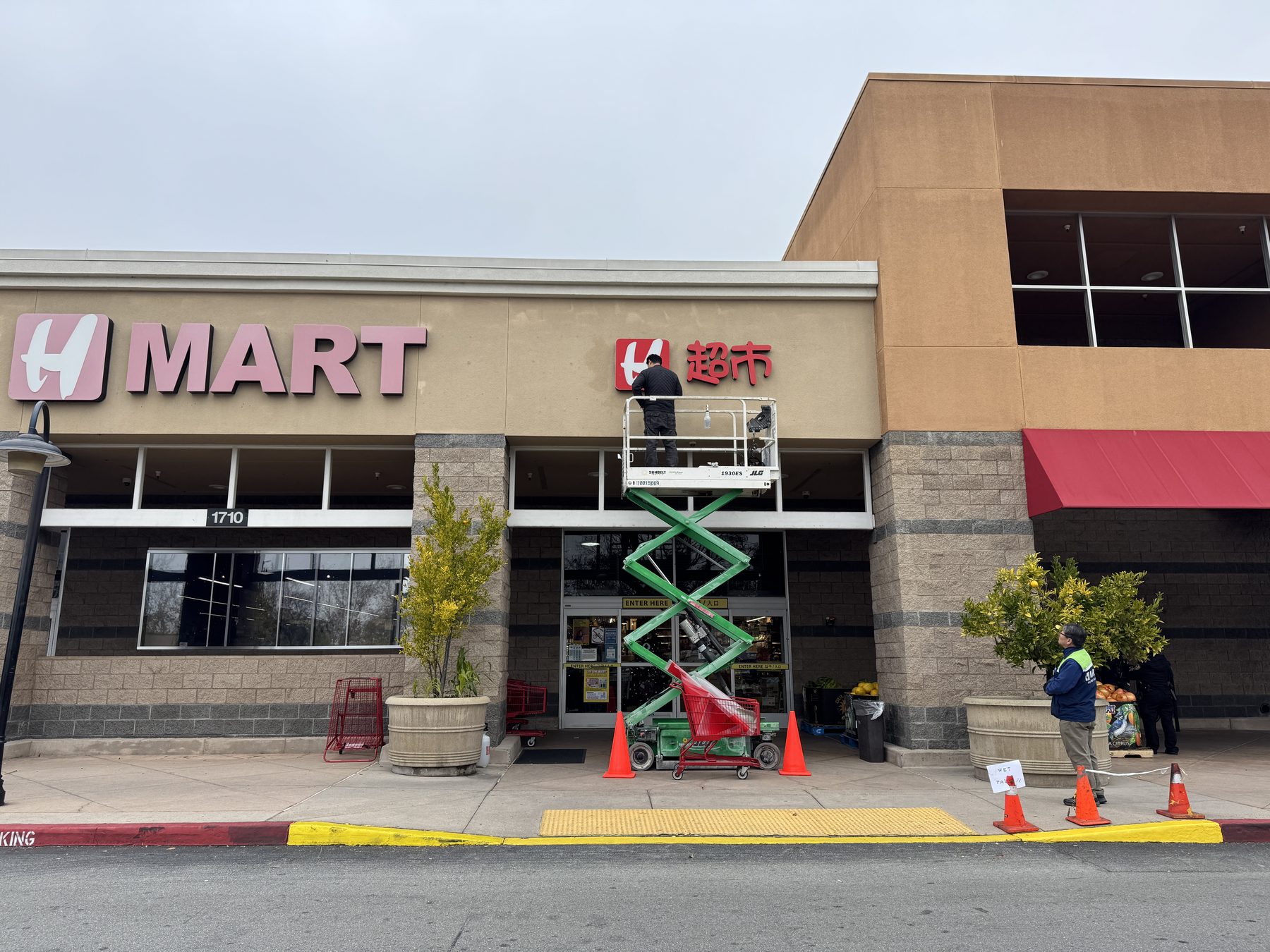
Exhibit B — day zero
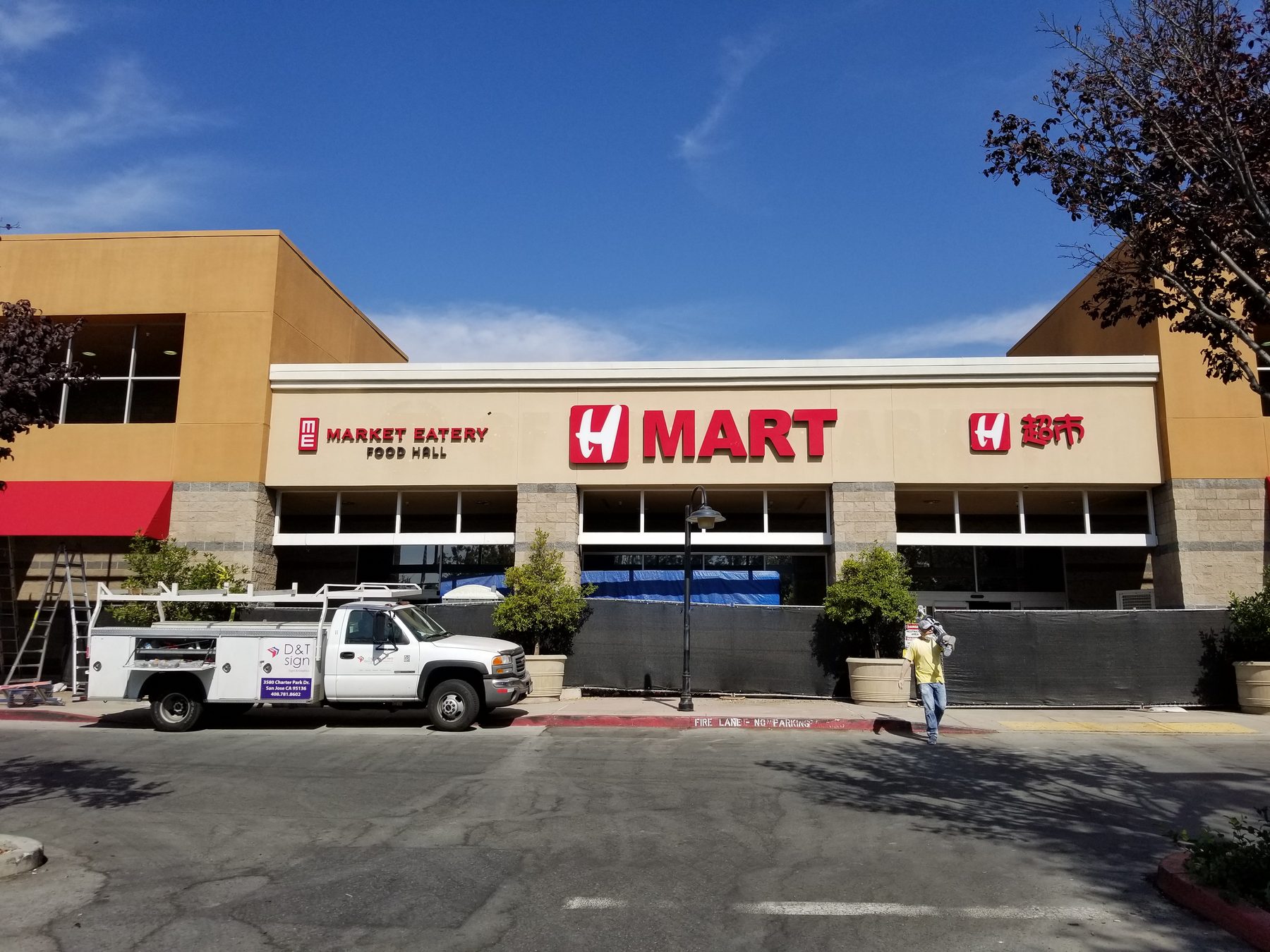
On day one, every material looks the same.
This photo is from a 2017 installation. Every letter is a deep, saturated red — and on that day, no owner, no project manager, no inspector could tell you which faces would still be red a decade later. Solid red acrylic is a completely reasonable choice at handover, because at handover the result is identical.
The difference only emerges around year five, in the California sun — and because the fade is gradual and even, the people who see the sign every day rarely notice it happening. It takes a fresh face next to an aged one to make it visible at all.
The material logic
Why red ages — and how film holds it.
Red is the pigment most vulnerable to ultraviolet light. When the color is cast into the acrylic itself, the pigment takes the UV hit directly, with no protective layer — and it doesn't fade evenly toward a lighter red. It drifts to pink. It isn't a defect and it isn't poor work; it is simply what a decade of direct sun does to that material.
Our spec puts the color in a UV-rated 3M vinyl film over a white acrylic face. The film carries the color and absorbs the UV. It holds the exact brand color — and when the film eventually ages, it can be re-wrapped without replacing the face. On a facade that takes direct California sun, we treat this as the baseline, not an upgrade.
The cost difference is not a premium. It is the year-five replacement, paid once, in advance — and then never again.
Exhibit C — the complete cycle
One sign. Nine years. Three photographs.
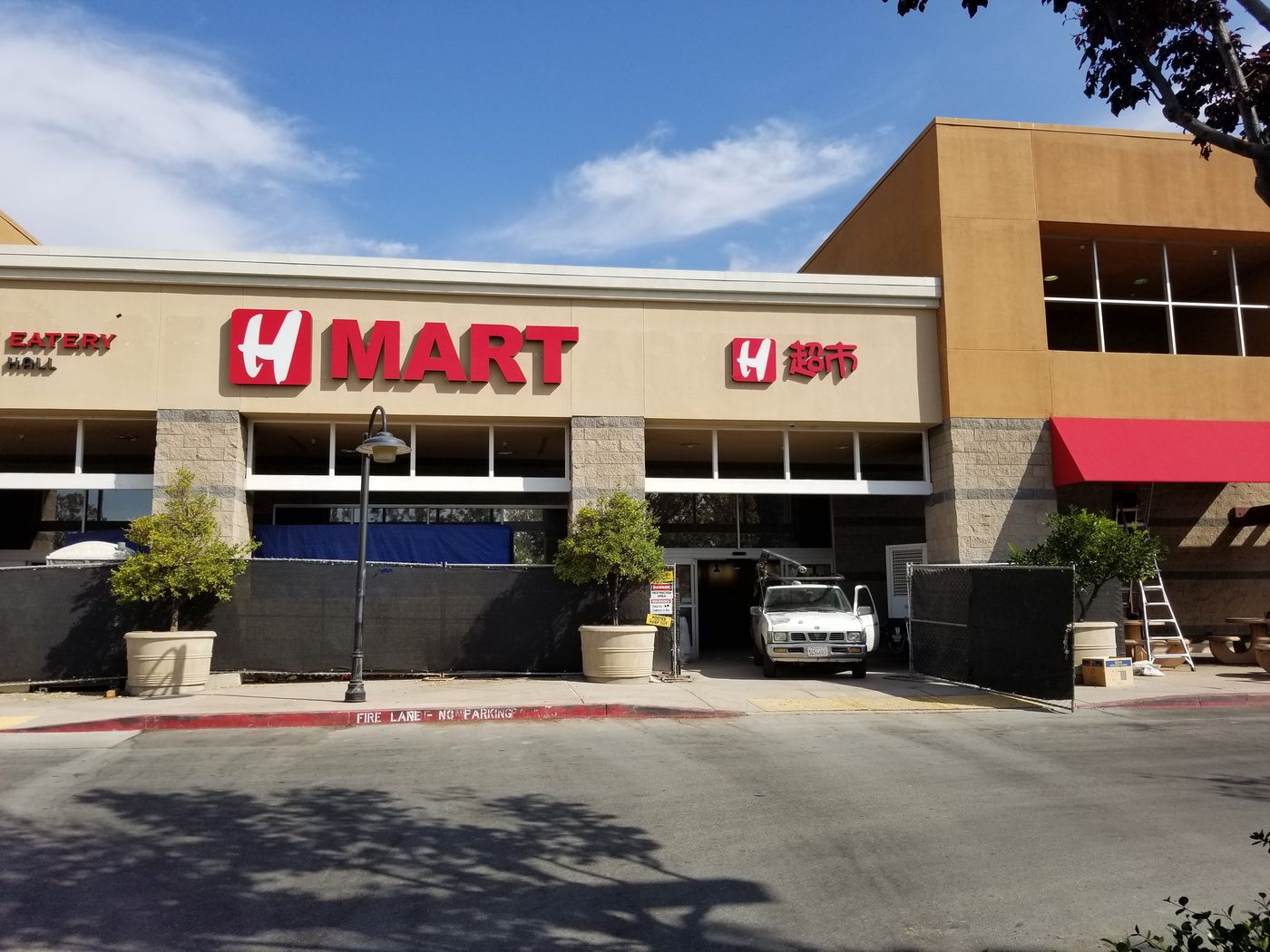
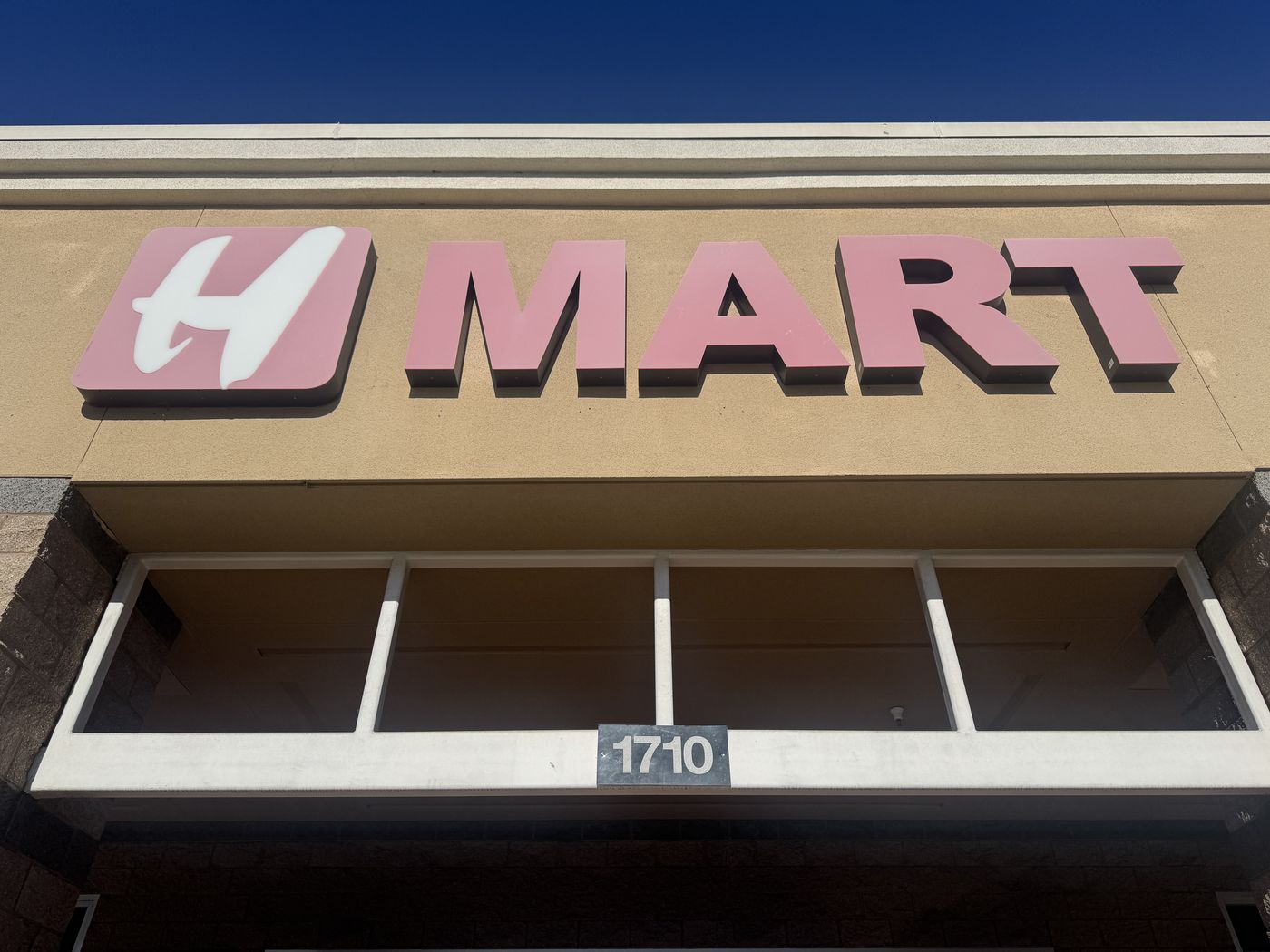
This is the same sign, at the same San Jose store, photographed across its whole life: installation day in 2017, behind construction barricades; the quiet fade by 2025; and back to true brand red in 2026 after we refaced it. Nothing about the sign's structure changed — same cabinet, same wiring, same wall. Only the face is new, and with it the color and the night-time brightness came back.
2017 — installed
2025 — faded by the sun
2026 — refaced, new again
An aged sign doesn't need to be torn down to look new. Refacing renews the color, sharpens the contrast, and brings back the glow it had on day one — at a fraction of what a new sign costs.
The renewal — 2026
Same sign. Same wall. New again.
In 2026, H Mart brought us in to renew signage at eight locations across California. We didn't tear anything down. We re-skinned the existing faces in UV-rated 3M vinyl matched to the brand's true red — keeping the structures, the electrical, and the permits that were already in place. Renewal costs a fraction of full sign replacement, and because the color now lives in the film, the next refresh is a re-wrap, not a rebuild.
The work happens overnight. Stores opened on schedule every morning, and shoppers simply arrived one day to a storefront that looked new — and at night, glowed like it did on day one.
Before renewal — Torrance, aged in the sun
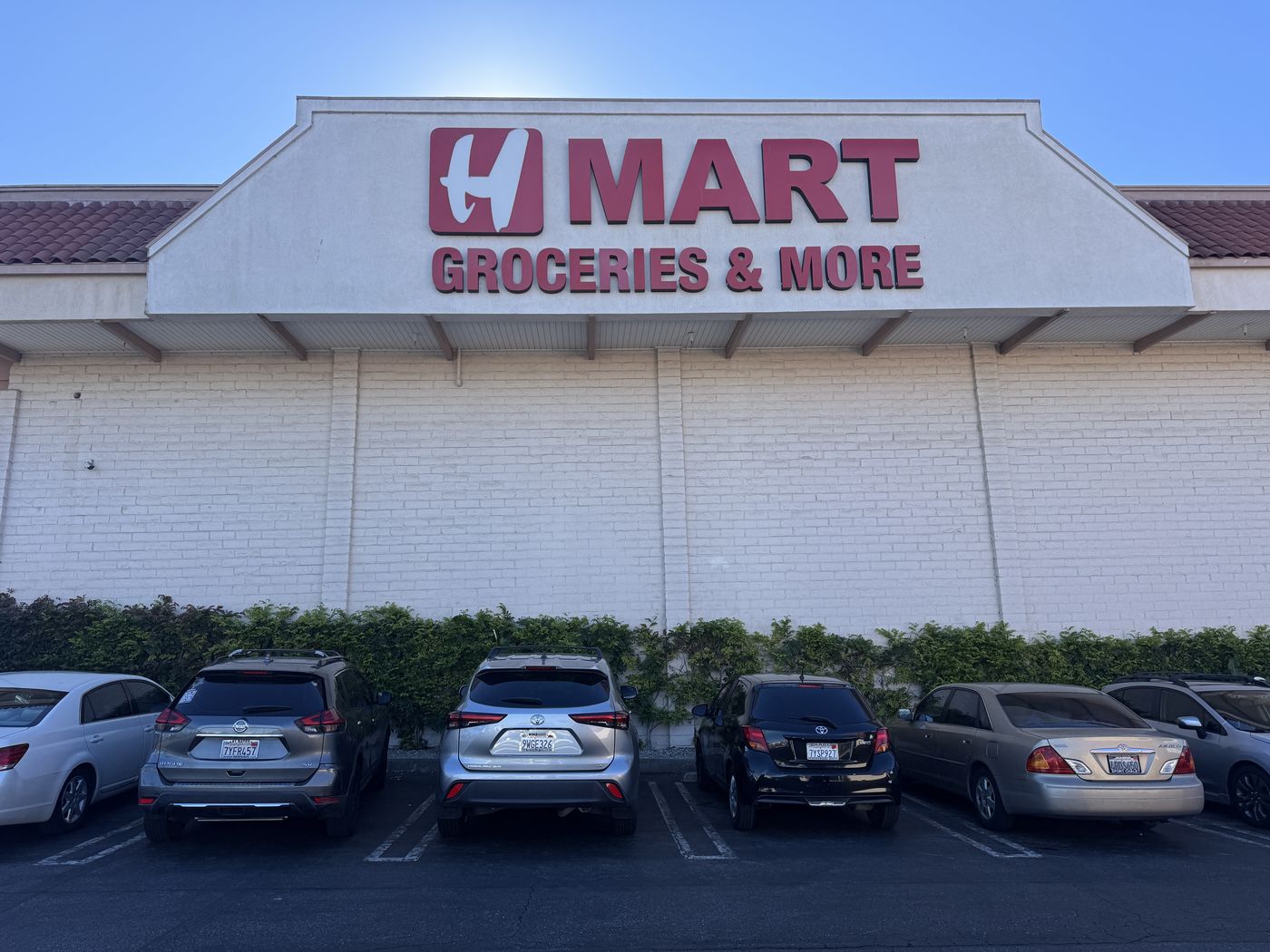
After renewal — same wall, true brand red
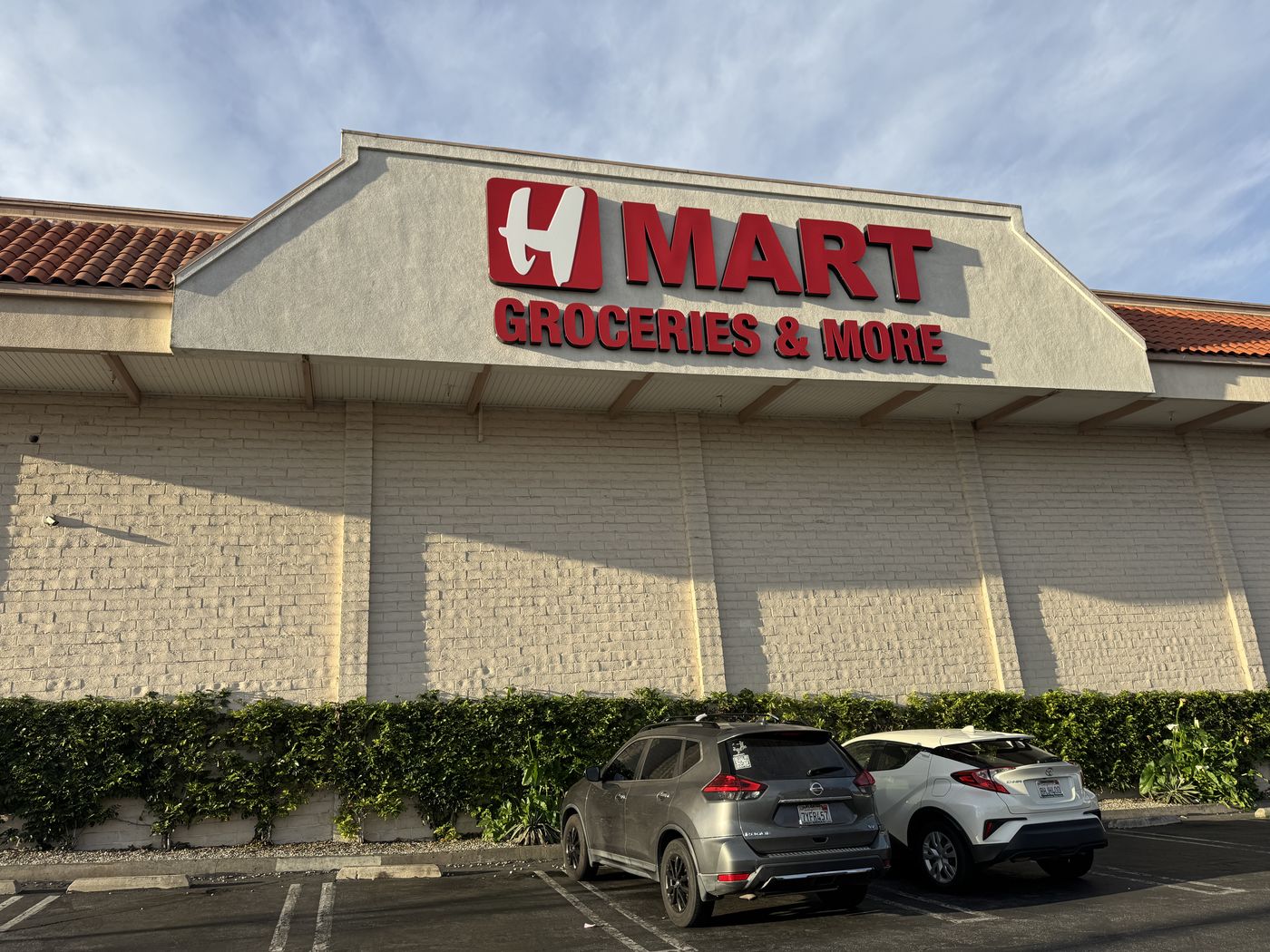
Before renewal — entrance pediment
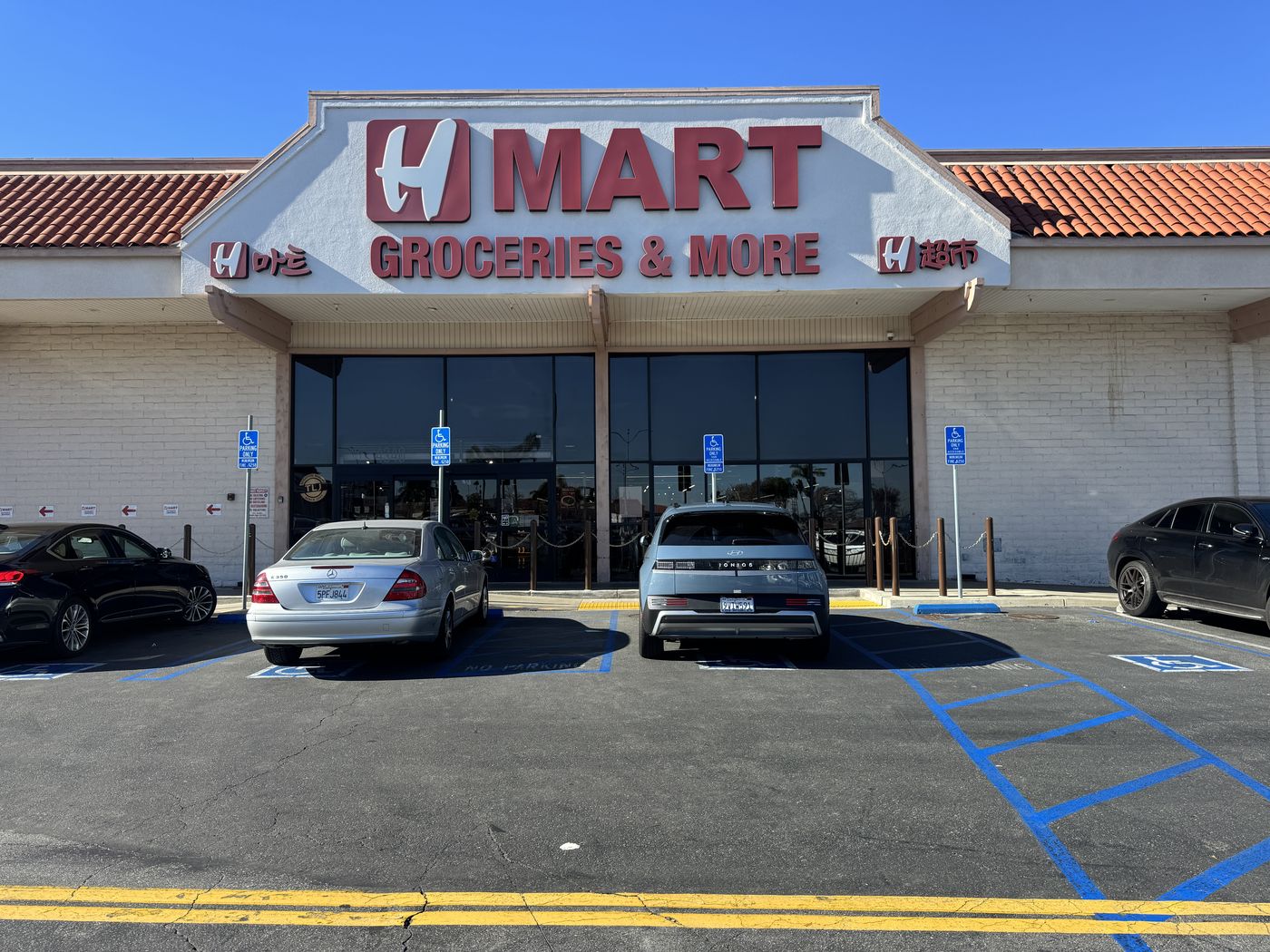
After renewal — entrance, renewed
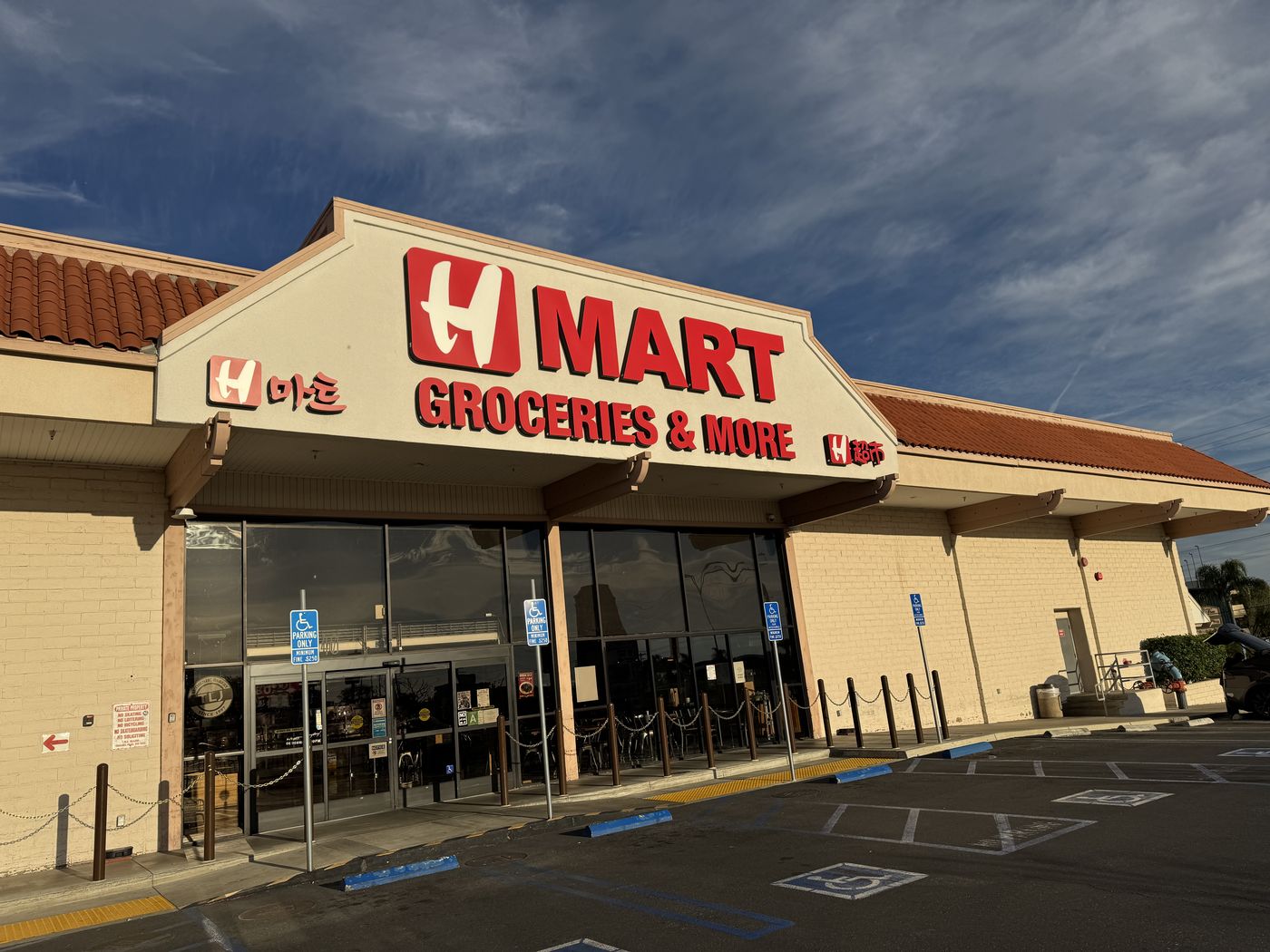
Before renewal — Buena Park, faded
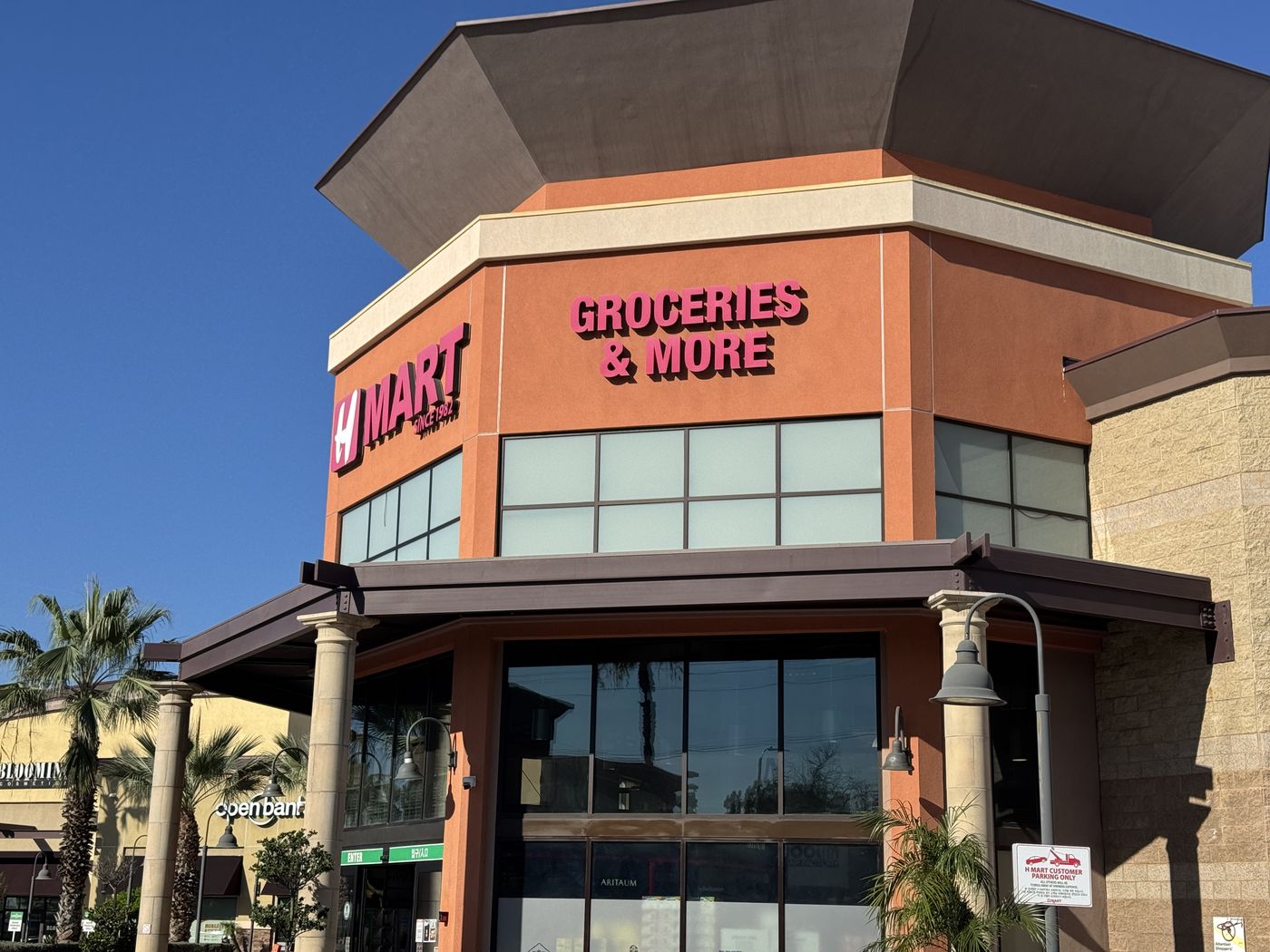
After renewal — Buena Park, first night lit
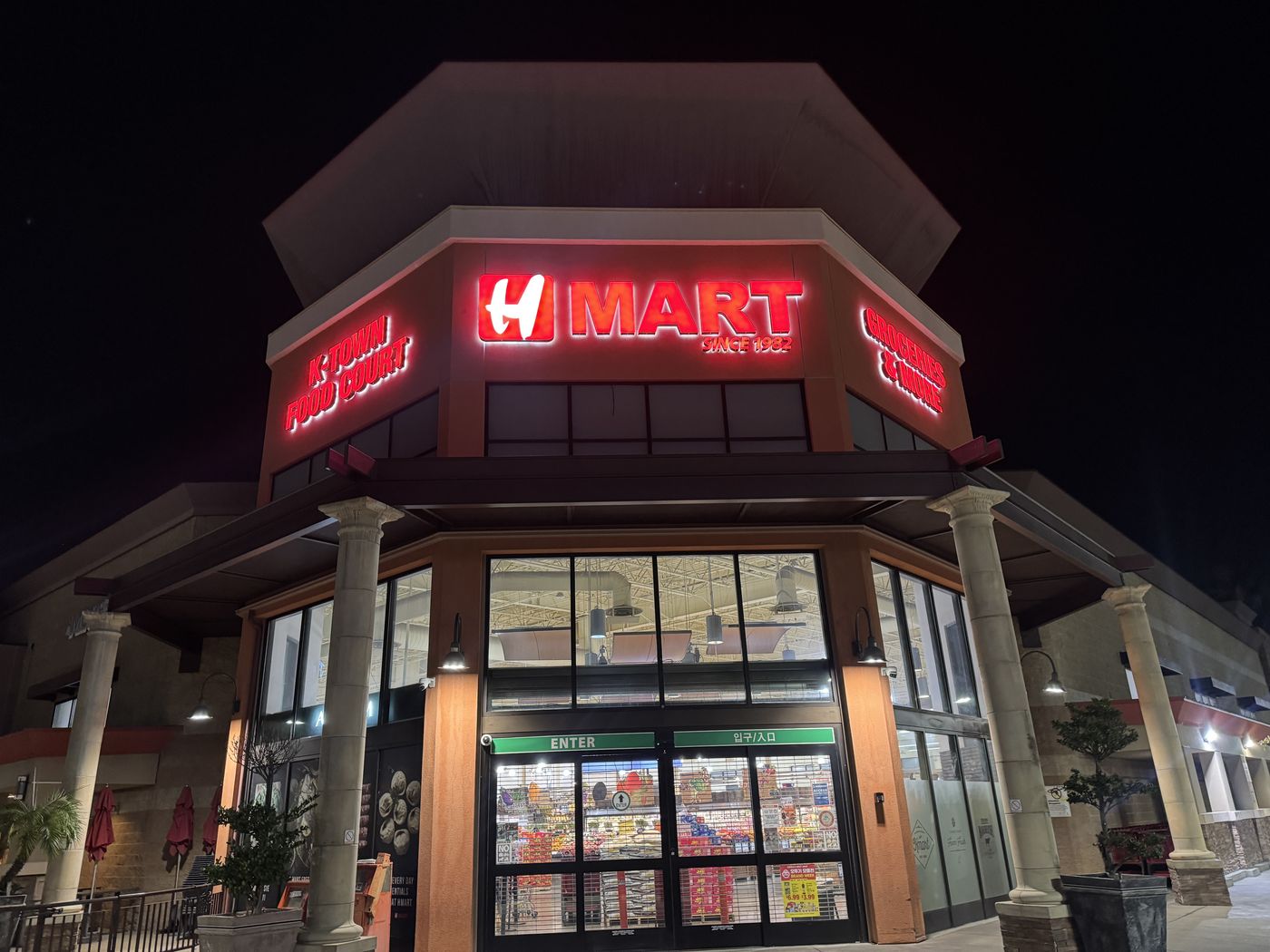
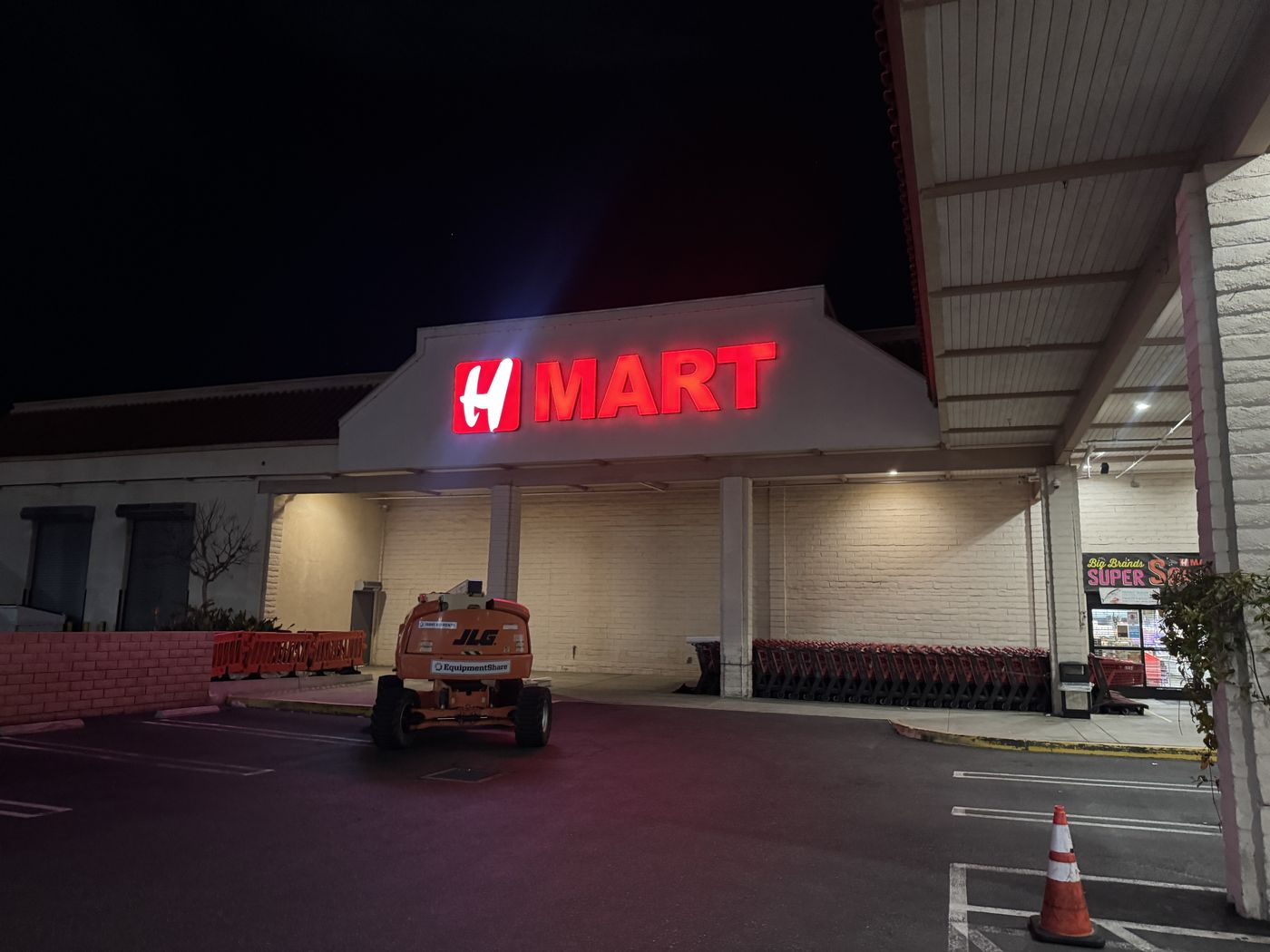
We've installed for H Mart since 2017. Nine years later we were back on the same walls — this time to make them new again.
The DT Signs standard
We don't sell what a sign looks like on install day. We sell what it looks like in year nine.
Has your sign quietly lost its color?
Walk outside and look — really look. If the red isn't the red it was, renewal brings it back for a fraction of replacement, overnight, without touching your structure or permits. And if you're planning a new sign with a specified brand color on a sun-facing facade, let's spec it for the long run the first time. Either way, we'll show you the material logic — with photos, not promises.